A maintenance technician reaches into a live electrical panel. The circuit breaker trips back on—remotely, accidentally, or due to an unaware coworker. Seconds later, a life is changed forever. This scenario isn’t rare. Electrical hazards account for hundreds of injuries and dozens of fatalities each year in industrial and commercial environments. Yet most are entirely preventable with one simple, consistent practice: lockout tagout breaker locks.
These small but critical devices physically block circuit breakers from being re-energized during maintenance. More than just plastic clips, they are engineered safeguards that enforce accountability, ensure compliance with OSHA and NFPA 70E standards, and create a culture of safety where human error can’t override procedure.
Below, we break down exactly how breaker locks function, why they matter, and how to deploy them effectively.
Why Lockout Tagout Breaker Locks Are Non-Negotiable
Lockout tagout (LOTO) is a safety procedure used to ensure dangerous machines or energy sources are properly shut off and cannot be restarted before maintenance or servicing is complete. Breaker locks are a core component of this system when dealing with electrical circuits.
Without them, a single misstep—a breaker flipped back on manually or through automatic reset—can lead to arc flashes, electrocution, or fatal burns. The National Fire Protection Association (NFPA) reports that arc flash incidents occur nearly five to ten times per day in the U.S. alone. A properly applied breaker lock drastically reduces the risk.
Real-World Example: The Cost of Skipping a Lock
In 2022, an HVAC technician in Ohio was repairing a rooftop unit. The main disconnect was off, but no lock was placed on the breaker panel downstairs. A building operator, unaware of the work, re-energized the circuit during a routine check. The technician suffered third-degree burns and permanent nerve damage.
The root cause? No physical lockout device was used. A $12 breaker lock could have prevented it.
How Lockout Tagout Breaker Locks Work
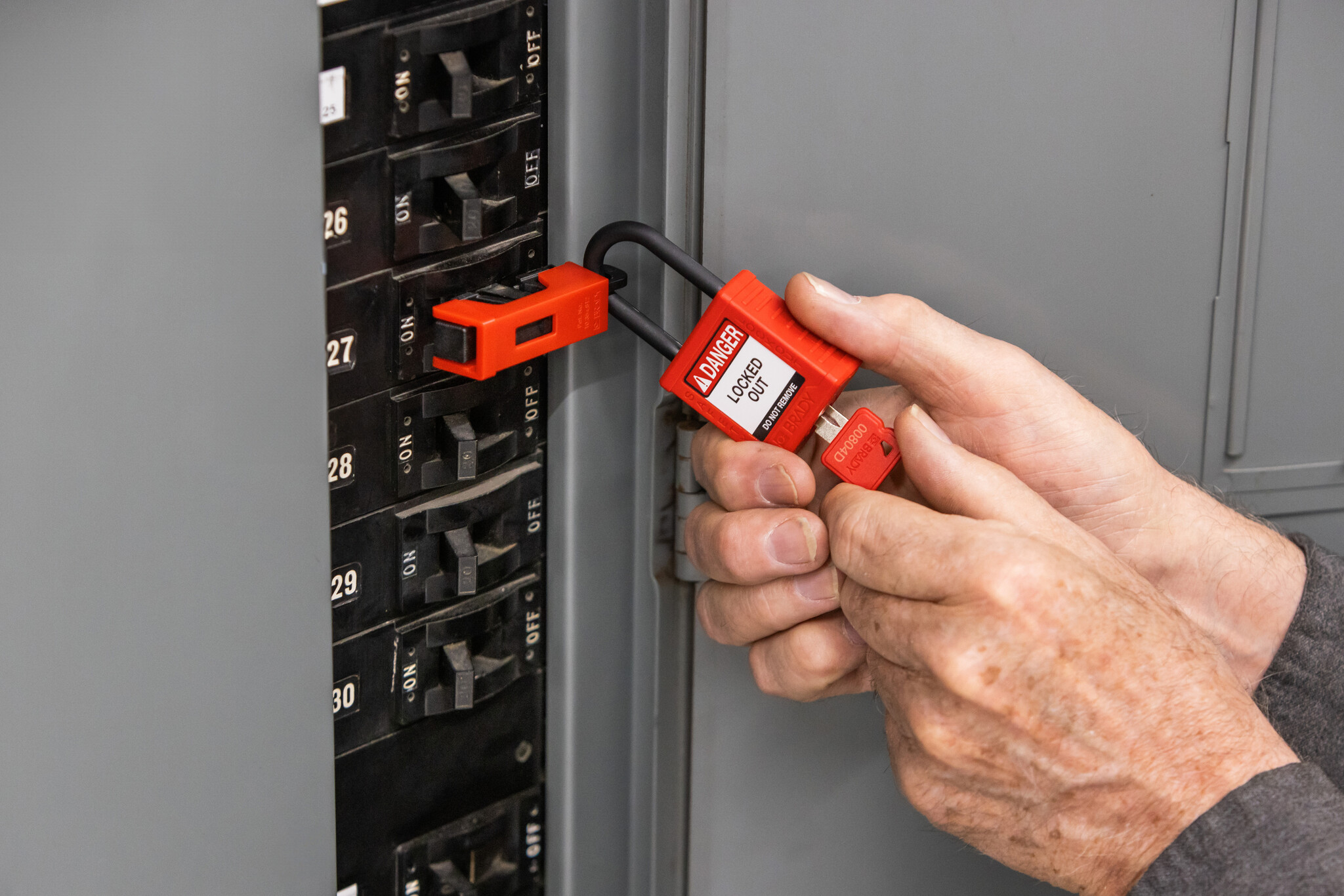
Breaker locks are mechanical devices that strap, clip, or slide over a circuit breaker’s toggle switch, preventing it from being moved to the "on" position. They are designed to accept a padlock, ensuring only the authorized employee who applied the lock can remove it.
They work in tandem with tagout procedures: a durable tag identifies who locked the device, when, and why. But the tag alone is not enough—physical prevention is the gold standard.
Key Components of a Breaker Lock System
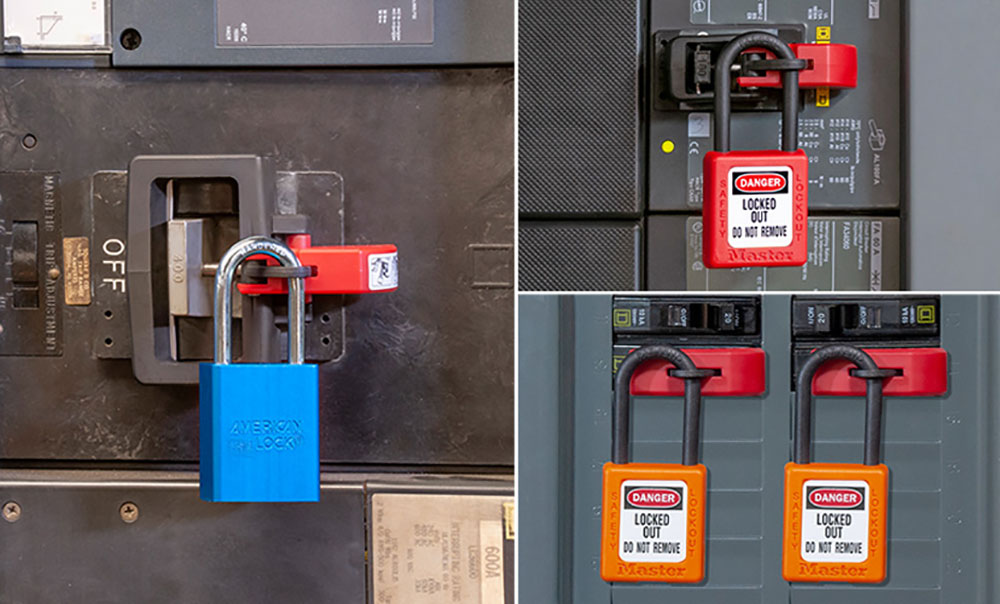
- Locking Mechanism: Usually a hinged clamp or sliding shroud that immobilizes the breaker toggle.
- Padlock Interface: A shackle hole compatible with standard safety padlocks (typically 5–9mm shackle diameter).
- Breaker Compatibility: Designed to fit common breaker sizes (single-pole, double-pole, tandem).
- Tag Attachment Point: Built-in slot or loop for safety tags.
- Material: UV-resistant, flame-retardant polymers or rugged metals for durability.
Even the most advanced lock won’t help if it doesn’t fit the breaker. Misapplication—using a universal lock that slips or jams the switch—is a common failure point.
Common Types of Breaker Locks and Their Uses
Not all breaker locks are the same. The right choice depends on your panel configuration, breaker size, and operational environment.
1. Receptacle-Style Locks (Sliding Shrouds)
These slide over the breaker toggle and lock in place using a side tab. Ideal for tight panels where space is limited.
- Best for: Standard single-pole breakers
- Pros: Low profile, quick installation
- Cons: Less secure on worn or oversized breakers
2. Hinged Locks (Clamp-On)
Feature a two-part clamshell design that clamps around the toggle. Secured with a padlock.
- Best for: Double-pole or high-amperage breakers
- Pros: High retention force, compatible with most standard breakers
- Cons: Bulky; may interfere with adjacent breakers
3. Universal Toggle Locks
Adjustable clamps that fit multiple breaker types. Often made from reinforced nylon.
- Best for: Mixed panels with various breaker brands
- Pros: Cost-effective for diverse setups
- Cons: Risk of improper fit if not adjusted correctly
4. Group Lockout Hasps
Used when multiple technicians are working on the same circuit. A hasp is installed on the breaker, allowing each worker to apply their own lock.
- Best for: Team maintenance operations
- Pros: Enforces individual accountability
- Cons: Requires coordination and training
5. Molded Plastic Lockouts
Pre-formed, rigid locks molded to fit specific breaker models (e.g., Square D QO, Siemens, GE).
- Best for: Facilities with standardized electrical panels
- Pros: Perfect fit, tamper-resistant
- Cons: Limited interchangeability
Choosing the Right Breaker Lock: What to Consider
Selecting the correct lock isn’t about price or color—it’s about precision and compliance. Here’s what smart safety managers evaluate:
Compatibility
with Breaker Type
Measure the toggle width and travel stroke. A lock that binds the mechanism can damage the breaker or create a false sense of security.
Example: A tandem breaker has a narrower toggle than a standard single-pole. Use a low-profile lock to avoid interference.
Material and Environmental Resistance
In industrial environments, UV exposure, oils, and temperature extremes degrade materials. Opt for polycarbonate or polypropylene with UL 94 V-0 flame rating.
Lockout Visibility
Bright red or orange locks increase visibility. Some models include built-in tag holders with bold lettering areas.
Ease of Use
If it’s hard to install, workers will bypass it. Look for quick-release tabs, ergonomic design, and one-handed operation where possible.
Regulatory Alignment

Ensure devices meet OSHA 29 CFR 1910.147 and are tested to withstand at least 3,000 volts (per NFPA 70E).
Top 5 Lockout Tagout Breaker Locks in 2024
| Product | Manufacturer | Key Features | Ideal For |
|---|---|---|---|
| Loto-BK1 | Brady | Reusable, UV-resistant, fits most single/double pole breakers | General industrial use |
| Lockout Pro LP200 | Grainger | Hinged clamp with 8mm shackle hole, high grip | High-vibration environments |
| Seton 78380 | Seton | Molded for Square D QO breakers, red polycarbonate | Standardized electrical rooms |
| Master Lock 194DAT | Master Lock | Universal fit, adjustable jaw, integrated tag holder | Multi-brand facilities |
| Safeguard SG-BK2 | SafetyMade | Group hasp-ready, chemical-resistant polymer | Team maintenance tasks |
These are not one-size-fits-all. Always test a sample before bulk procurement.
Common Mistakes That Undermine Breaker Lock Effectiveness
Even with the right tools, human behavior can compromise safety. These pitfalls are frequently documented in OSHA violation reports:
1. Using Tags Without Locks
Tags are warnings. Locks are barriers. Relying solely on a tag violates LOTO protocol. Someone might ignore it.
2. Sharing Locks or Keys
Each worker must use their own lock and key. Shared locks break the chain of accountability.
3. Locking Out the Wrong Breaker
Incorrect identification leads to incomplete isolation. Always verify de-energization with a voltage tester after locking.
4. Over-Tightening Plastic Locks
Excessive force can crack polymer housings, rendering them ineffective. Hand-tighten only.
5. Ignoring Visual Inspections
Cracked, warped, or worn locks should be retired immediately. Include them in monthly safety audits.
Integrating Breaker Locks Into Your LOTO Program
A lock is only as good as the system around it. Breaker locks must be part of a documented, trained, and audited LOTO program.
Critical Steps for Implementation
- Energy Control Procedure (ECP): Document every machine or panel that requires lockout, including breaker locations.
- Training: Train all affected employees—not just electricians—on lock application, verification, and removal.
- Audit Schedule: Quarterly audits ensure compliance and catch drift in procedures.
- Lock Station Setup: Keep breaker locks, tags, and padlocks in a visible, accessible location near electrical rooms.
- Rescue Plan: Train personnel in emergency lock removal (using master key systems, only under strict control).
One manufacturing plant reduced electrical incidents by 88% in two years simply by standardizing breaker lock use and conducting monthly drills.
The Bottom Line: Safety Isn’t Optional
Lockout tagout breaker locks are not accessories. They are engineered safety controls with one mission: to make re-energizing impossible until work is complete. In high-risk electrical environments, they are non-negotiable.
The investment is minimal—a few dollars per lock—but the return is measured in lives protected, downtime avoided, and compliance maintained.
Action Step: Audit your electrical panels today. Identify every breaker that needs a lock. Test fit sample devices. Train your team. Then lock it down—literally.
Frequently Asked Questions
What is a lockout tagout breaker lock used for? It physically prevents a circuit breaker from being turned on during maintenance, ensuring worker safety.
Can one lockout device secure multiple breakers? Yes, group lockout hasps or multi-breaker lockout brackets allow multiple locks on a single point.
Are breaker locks required by OSHA? Yes, OSHA 1910.147 mandates control of hazardous energy, and breaker locks are a recognized method.
Do breaker locks work on all panel types? Most work on standard breakers, but molded or brand-specific models may be needed for compatibility.
How often should breaker locks be inspected? Monthly visual checks are recommended; replace any with cracks, warping, or damaged locking mechanisms.
Can plastic breaker locks withstand high heat? High-quality models use heat-resistant polymers, but always verify temperature ratings for your environment.
What’s the difference between lockout and tagout? Lockout physically prevents activation; tagout is a warning label. Both are required, but lockout is the primary control.
FAQ
What should you look for in Lockout Tagout Breaker Locks: Safety Essentials for Electrical Control? Focus on relevance, practical value, and how well the solution matches real user intent.
Is Lockout Tagout Breaker Locks: Safety Essentials for Electrical Control suitable for beginners? That depends on the workflow, but a clear step-by-step approach usually makes it easier to start.
How do you compare options around Lockout Tagout Breaker Locks: Safety Essentials for Electrical Control? Compare features, trust signals, limitations, pricing, and ease of implementation.
What mistakes should you avoid? Avoid generic choices, weak validation, and decisions based only on marketing claims.
What is the next best step? Shortlist the most relevant options, validate them quickly, and refine from real-world results.