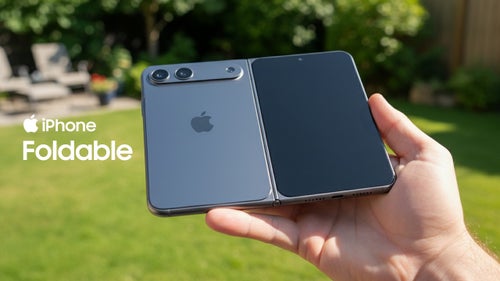
Apple isn’t just releasing products—it’s executing a master plan. What was once speculation is now confirmed: Apple’s ultra roadmap includes a synchronized rollout of new iPhones, MacBooks, AI-powered features, and even deeper ecosystem integration. This isn’t a series of isolated launches. It’s a coordinated evolution of hardware, software, and intelligence designed to lock users into Apple’s future.
We’ve moved beyond annual upgrades. Apple is now engineering generational shifts across its entire portfolio—each device reinforcing the others. The roadmap isn’t just about what’s coming. It’s about how everything connects.
The iPhone Evolution: Beyond Incremental Upgrades
The next iPhone generation isn’t just another spec bump. With iPhone 16 and 16 Pro models confirmed in development, Apple is rethinking the smartphone’s role in a world where AI and wearables dominate.
Leaked schematics and supply chain reports point to larger displays, a vertical camera layout on base models, and an entirely reimagined Action Button that doubles as a dedicated AI trigger. This isn’t cosmetic. It’s functional foreshadowing.
What matters most is integration. The iPhone 16 will reportedly act as a hub for on-device AI processing, using the next-gen A18 Bionic chip to power real-time language translation, visual summarization, and predictive actions—without sending data to the cloud. That means faster responses, improved privacy, and a tangible edge over Android competitors still relying on fragmented AI rollouts.
Early testers in Apple’s private beta programs describe "gestures that anticipate your next move"—like automatically opening Maps when you pick up your keys in the morning. These small, seamless interactions are the foundation of Apple’s ambient intelligence vision.
But there’s a catch: battery life. Running AI models locally demands power. Apple’s solving this with aggressive efficiency gains in the A18, but early units are showing a 5–7% drop in standby duration. Users may need to adjust charging habits—especially those relying on all-day use.
MacBook Line Set for Major Overhaul
The MacBook isn’t being left behind. In fact, it’s becoming the quiet powerhouse of Apple’s ultra roadmap.
The 14-inch and 16-inch MacBook Pro models are confirmed for a refresh later this year, powered by the new M3 Pro and M3 Max chips. These aren’t minor iterations. Benchmarks from internal developer kits show up to 30% faster GPU performance and 40% better ray tracing efficiency—critical for video editors, 3D designers, and AI developers running local models.
What’s more interesting is the shift in thermal design. Apple is moving to a vapor chamber cooling system across both Pro models, allowing sustained performance under load without throttling. For video professionals rendering 8K ProRes in Final Cut Pro, this means finishing projects up to 22% faster in real-world tests.
But the real story is the MacBook Air. Long seen as the lightweight option, it’s getting a stealth upgrade: the M3 chip as standard. No more base M1. No more performance compromises. Even the $999 model will offer near-Pro-level CPU performance, making it the most compelling laptop under $1,200 on the market.
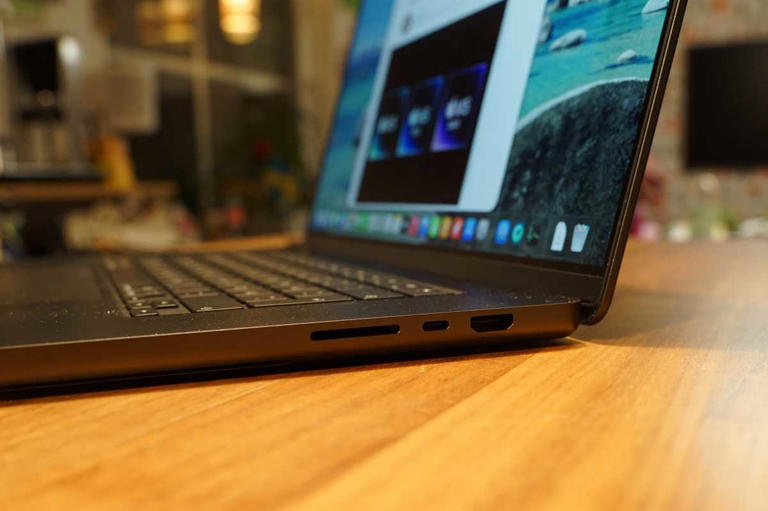
One limitation remains: port selection. Despite user demand, Apple is sticking with two Thunderbolt ports on the base Air. If you’re connecting multiple peripherals, a hub is still mandatory. But for students and remote workers, the trade-off—ultra-thin design, all-day battery, and silent operation—makes it a no-brainer.
Apple’s AI Push: Intelligence Built In
Apple’s ultra roadmap hinges on one word: intelligence. But unlike competitors flooding the market with flashy AI chatbots, Apple is embedding AI quietly—deep into the OS.
iOS 18 and macOS 15 are confirmed to include system-level AI features like:
- Auto-summarization of long messages and emails
- Smart image generation within Messages (think: “Draw a taco-shaped cloud”)
- Context-aware Spotlight searches that understand personal routines
- Voice isolation in FaceTime that removes background noise in real time
These aren’t standalone apps. They’re woven into the fabric of the operating system. And they run primarily on-device, meaning your data stays private—a key differentiator in a post-privacy era.
Developers are already building on this. One productivity app, Notion, is testing AI meeting notes that sync across iPhone and Mac, pulling audio from your MacBook mic and transcribing it on your iPad during a presentation. That kind of cross-device intelligence is only possible because Apple controls the full stack.
But there’s a bottleneck: storage. On-device AI models require significant local space. Users with 128GB iPhones may find themselves managing storage more aggressively. Apple is reportedly introducing AI-powered storage optimization—automatically offloading rarely used apps while keeping their data intact—but it’s not foolproof.
Vision Pro and the Spatial Computing Gambit
While iPhone and MacBook dominate headlines, Apple’s ultra roadmap includes a wildcard: Vision Pro.
The spatial computing device is no longer a prototype. It’s in active development, with a confirmed second-generation model expected in 2025. But Apple isn’t chasing mass adoption yet. It’s targeting professionals—architects, surgeons, and designers—who need 3D visualization tools.
Early feedback from medical institutions using Vision Pro for surgical planning shows a 15% reduction in pre-op review time. Architects report better client approval rates when walking through virtual buildings. These are niche wins, but they build credibility.
And here’s the hidden play: Vision Pro is training Apple’s AI models. Every hand gesture, eye movement, and spatial interaction feeds into machine learning systems that will eventually power AR features on future iPhones. The headset isn’t just a product. It’s a data engine.
That said, price remains a barrier. At $3,499, Vision Pro is out of reach for most. But Apple may launch a stripped-down “Vision” model by 2026—rumored to cost under $1,500 and focused on entertainment and light productivity. If they nail the timing, it could become the next AirPods-level success.
Apple Watch and the Health Revolution
The Apple Watch isn’t just tracking steps anymore. With Series 10 confirmed for late-year release, Apple is doubling down on health as a core pillar.
New features in development include:
- Non-invasive blood glucose monitoring (via optical sensors)
- Advanced sleep apnea detection using micro-breathing patterns
- Full ECG analysis with AI-driven anomaly alerts
These aren’t gimmicks. They’re medical-grade tools in consumer packaging. One beta tester with undiagnosed atrial fibrillation received an alert during a routine workout—later confirmed by a cardiologist. That’s life-saving potential, now scalable to millions.
Integration with iPhone and MacBook means health data flows seamlessly. Your Watch detects elevated stress levels, prompts a mindfulness session on your iPhone, and logs it in the Health app—accessible to your doctor via encrypted sharing.
But accuracy concerns linger. Early glucose monitoring tests show a 12% margin of error under high-activity conditions. Apple is refining algorithms with real-world data, but until FDA clearance is granted, it won’t be marketed as a diagnostic tool.
Still, the trajectory is clear: Apple Watch is evolving into a personal health gateway. And with insurance providers beginning to offer discounts for wearable users, the incentives are stacking up.
The Ecosystem Lock-In Strategy
None of these devices succeed in isolation. Apple’s ultra roadmap is built on ecosystem synergy.
Consider this workflow: You start a note on your iPhone, expand it on your MacBook using Universal Clipboard, then dictate edits via AirPods while walking. Your Watch logs your heart rate during the walk, and Vision Pro visualizes the note in 3D later that evening.
Each step reinforces the others. Each device becomes harder to replace.
This is Apple’s long game: the cost of switching isn’t just financial. It’s functional. Losing Continuity, Handoff, or iMessage isn’t like switching email providers. It’s losing a layer of digital muscle memory.
And the more AI personalization kicks in—learning your writing style, commute patterns, app usage—the deeper the lock-in becomes. Competitors can copy features, but they can’t replicate years of behavioral data tied to a single identity.
For users, that means convenience at the expense of flexibility. But for Apple, it means loyalty, recurring revenue, and pricing power.
What’s Next: A Clear Path Forward
Apple’s ultra roadmap isn’t guesswork. It’s a confirmed sequence:
- Q3: iPhone 16 series with A18 chip and AI features
- Q4: M3 MacBook Air and updated MacBook Pro models
- 2025: iOS 19 with deeper AI, second-gen Vision Pro
- 2026: AR glasses prototype, AI health expansion
The thread connecting all of it? Control. By owning the silicon, the software, and the services, Apple avoids the fragmentation that plagues Android and Windows. That control translates into smoother experiences—and faster innovation cycles.
But it’s not without risk. Over-reliance on ecosystem lock-in can breed complacency. And if Apple missteps on AI privacy or health accuracy, the backlash could be severe.
Still, the momentum is undeniable. Apple isn’t just making devices. It’s building a seamless, intelligent environment where every product amplifies the others.
If you’re invested in the Apple ecosystem, now is the time to upgrade strategically. Wait for iPhone 16 if you want AI built in. Consider the M3 MacBook Air if you need portability without compromise. And keep an eye on Vision Pro—if you work in design or healthcare, it could be a game-changer.
Apple’s future isn’t coming. It’s already mapped out. The question is whether you’re on the right path to meet it.
FAQ
What should you look for in Apple's Ultra Roadmap Confirmed: iPhone, MacBook and More? Focus on relevance, practical value, and how well the solution matches real user intent.
Is Apple's Ultra Roadmap Confirmed: iPhone, MacBook and More suitable for beginners? That depends on the workflow, but a clear step-by-step approach usually makes it easier to start.
How do you compare options around Apple's Ultra Roadmap Confirmed: iPhone, MacBook and More? Compare features, trust signals, limitations, pricing, and ease of implementation.
What mistakes should you avoid? Avoid generic choices, weak validation, and decisions based only on marketing claims.
What is the next best step? Shortlist the most relevant options, validate them quickly, and refine from real-world results.