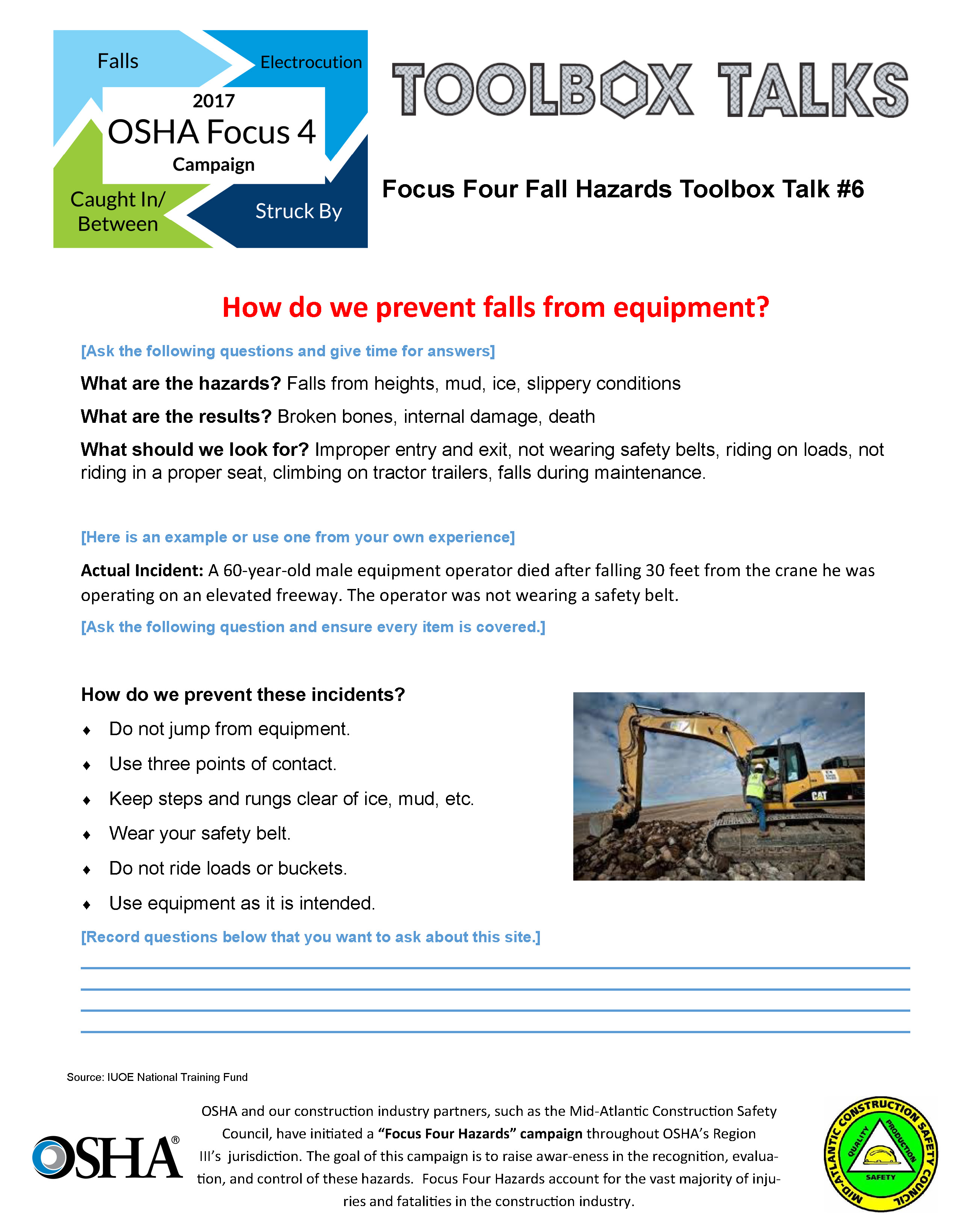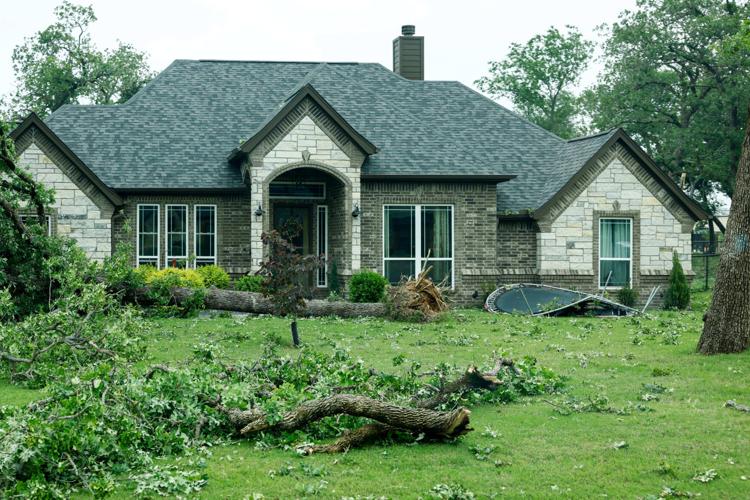
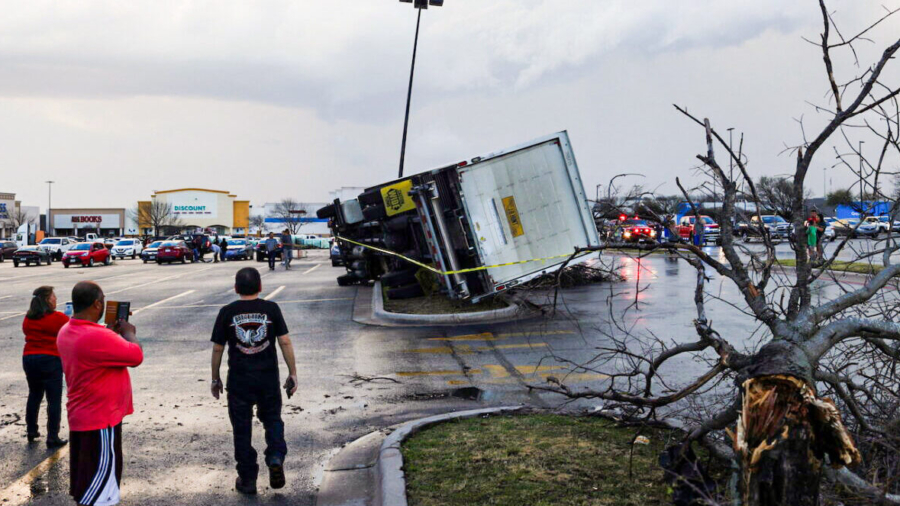
Entire neighborhoods lie in splinters. Roofs peeled like cans. Cars flipped like toys. Northern Texas is reeling after a violent outbreak of tornadoes tore through rural towns and suburban fringes, claiming at least two lives and obliterating dozens of homes. The destruction, concentrated in counties north of the Dallas-Fort Worth metroplex, underscores the terrifying speed and precision with which tornadoes can erase lives and infrastructure.
This wasn’t a single storm but a system-fueled assault—rotating supercells spawning multiple tornadoes in rapid succession. Survivors speak of hearing a freight train before the lights went out and walls collapsed. First responders arrived to scenes of total disarray: families huddled in ditches, children clutching pets, and entire streets reduced to foundations littered with personal wreckage.
The confirmed fatalities—one in Cooke County, another in Montague—were both in single-family homes that offered little resistance to EF-3 level winds. These deaths are not just statistics. They represent the fragility of life in the path of nature’s most violent windstorms, even in 2025, with advanced warning systems and storm tracking.
The Path of Destruction: Where and How the Tornadoes Struck
The primary damage corridor stretches from Jack County northeast through Clay and Cooke counties, with satellite touchdowns reported near Decatur and Gainesville. Mobile radar data from the National Weather Service (NWS) confirmed at least four tornadoes between 7:15 PM and 10:40 PM local time, the strongest estimated at EF-3 with peak winds near 150 mph.
Cooke County bore the worst of it. In the unincorporated community of Muenster, a tornado with a quarter-mile width ripped through a residential subdivision, leveling 17 homes and leaving several others uninhabitable. Power lines were downed across Highway 82, cutting off access for emergency vehicles for nearly two hours.
In Montague County, near the town of Nocona, a mobile home park was nearly wiped out. At least eight units were destroyed, with two fatalities confirmed in a double-wide trailer that was rolled 200 yards into a pasture. Emergency crews used thermal imaging to search debris piles for survivors, a grim necessity in such high-impact events.
Local law enforcement described scenes of “total ruin” and “emotional devastation.” First responders worked through the night, coordinating with Texas Task Force 1 and the Texas Division of Emergency Management to triage injuries, clear roads, and begin damage assessments.
How the Storm System Developed: Meteorological Context
This outbreak wasn’t random. It was the result of a volatile mix: a strong springtime cold front colliding with moist, unstable air surging north from the Gulf of Mexico. Upper-level wind shear provided the spin needed for supercell thunderstorms—storm engines capable of producing long-track tornadoes.
The Storm Prediction Center (SPC) had issued a Moderate Risk (Level 4/5) for severe weather across northern Texas 12 hours before the first tornado touched down. A Particularly Dangerous Situation (PDS) tornado watch covered 14 counties, a rare and urgent warning meant to signal life-threatening potential.
Despite these alerts, the speed of storm development caught some residents off guard. “We heard the sirens, but by the time we got to the basement, the roof was gone,” said one survivor from Lindsay, a small town in Cooke County. “The whole thing took maybe 45 seconds.”
This highlights a persistent challenge: even with accurate forecasting, the margin between warning and impact can be dangerously thin—especially at night, when visibility is low and people are asleep.
Human Cost: Stories from the Survivors
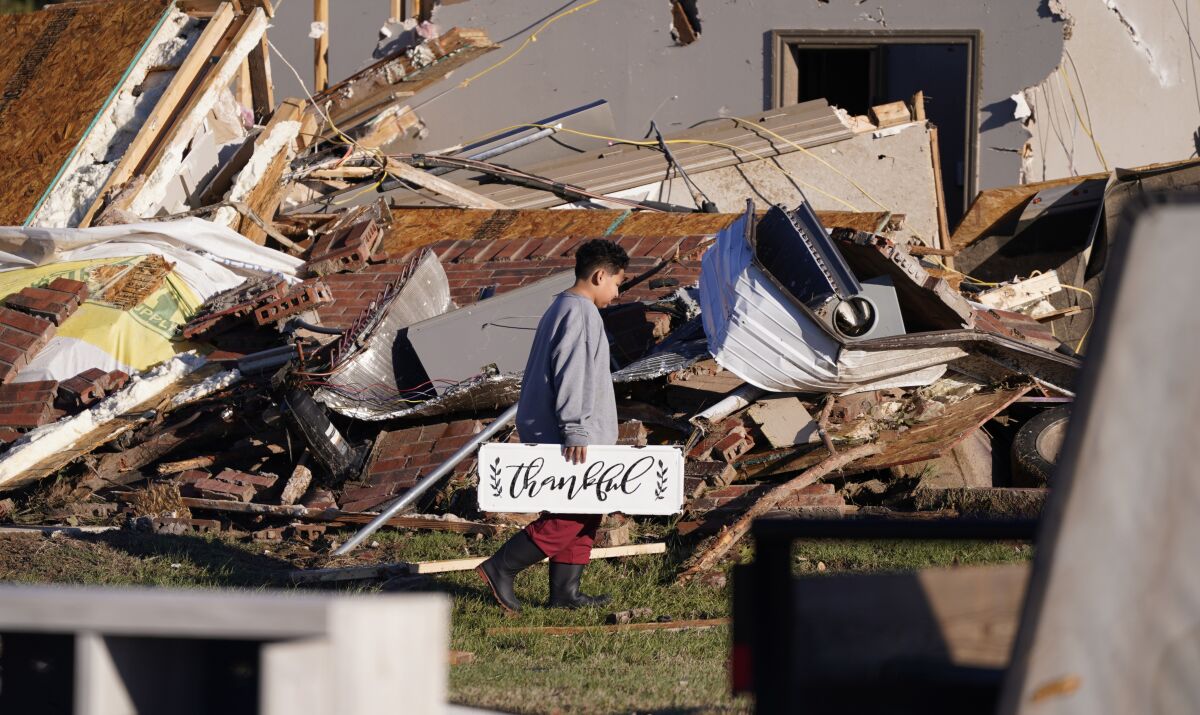
In the ruins of a yellow ranch-style home in Gainesville, a woman in her 60s sat on a folding chair, holding a photo album salvaged from the debris. “Everything else is gone—my husband’s tools, my daughter’s wedding dress. But I found this,” she said, voice trembling. “At least I have the memories.”
Others weren’t as lucky. A man in his 40s died trying to shield his dog from collapsing debris in a rural part of Montague County. His body was found under a collapsed garage wall. Emergency workers said he had no basement and limited storm shelter options.
These stories reflect a broader vulnerability: many homes in rural northern Texas lack storm shelters or basements. Mobile homes—particularly prevalent in trailer parks—are among the most dangerous places during a tornado. The NWS estimates that tornadoes kill disproportionately more people in mobile homes, even though they represent a small fraction of housing stock.
For families now living in Red Cross shelters, the immediate concerns are medical care, food, and mental health. “We’re treating injuries, yes, but also shock, anxiety, and trauma,” said Dr. Lena Patel, a volunteer physician at the temporary shelter in Denton. “People keep asking, ‘Why us?’ But really, they’re asking, ‘How do I go on?’”
Emergency Response and Recovery Challenges
The response has been swift but strained. Local fire departments were quickly overwhelmed. The Texas A&M Engineering Extension Service deployed swift-water rescue teams—normally used for floods—because downed power lines and debris blocked standard access routes.
Search and rescue concluded by mid-morning, with no additional victims found. The focus has now shifted to debris management, temporary housing, and utility restoration. Power remains out for over 18,000 customers across six counties, with estimates suggesting full restoration may take up to a week.
FEMA personnel have arrived to assess damage and determine eligibility for federal disaster aid. Preliminary estimates put property damage at over $42 million. Insurance adjusters are already on the ground, though many homeowners may discover their policies don’t cover all tornado-related losses—especially if they lacked wind mitigation upgrades.
One major hurdle: verifying structural safety. Buildings that appear intact may have compromised foundations or gas leaks. Officials are urging residents not to reenter damaged homes without inspection.
“We’re seeing homes where the walls are still standing but the frame is twisted. That’s not safe,” said County Judge Ronny Dodson. “We’ll have teams tagging structures—green for safe, yellow for restricted, red for condemned.”
Long-Term Risks and Rebuilding Realities
Recovery won’t end when the debris is cleared. For many, rebuilding will take months—if they can afford it. Federal assistance is limited. The average FEMA grant for housing after a disaster is just under $8,000, rarely enough to cover full reconstruction.
Homeowners without tornado-specific insurance face even steeper odds. Standard homeowners policies in Texas do cover wind damage, but deductibles can be high—especially in hail and wind-prone areas. Some residents opt for percentage-based deductibles (e.g., 2% of home value), which on a $250,000 home means a $5,000 out-of-pocket cost before coverage kicks in.
Rebuilding also raises questions about resilience. Should new homes be required to have storm shelters? Should building codes be updated for high-wind zones? These debates flare up after every major tornado event—but often fade before legislation passes.
Meanwhile, psychological recovery lags. Studies show that communities hit by violent tornadoes experience long-term increases in PTSD, anxiety, and depression. Local clinics are setting up counseling tents, but access remains uneven, especially in rural areas.
Why Some Areas Remain Vulnerable
Despite decades of warning technology, northern Texas still faces systemic exposure risks:
- Lack of basements: Soil composition (clay-heavy, high water table) makes basements rare and expensive to build.
- Mobile home density: Rural areas have a high concentration of manufactured housing, which offers minimal tornado protection.
- Nighttime tornadoes: Many of Friday’s tornadoes struck after dark, reducing visibility and public response time.
- Warning fatigue: Frequent false alarms can lead to complacency—some residents ignore sirens, thinking “it won’t hit us.”
One resident in Decatur admitted he didn’t take cover until he saw the sky turn green. “I’ve heard false alarms five times this spring. You start to doubt. Then the house is gone.”
This underscores a critical gap: better warnings alone won’t save lives. We need better shelters, better education, and better community planning.
What Comes Next: Immediate Actions for Survivors and Communities For those affected, the path forward is daunting but not hopeless. Immediate steps include:
- Register with FEMA at DisasterAssistance.gov or call 1-800-621-3362.
- Document damage with photos and videos before cleanup.
- Contact your insurer—start the claim process as soon as possible.
- Avoid downed power lines and report gas leaks immediately.
- Seek mental health support—free counseling is available through local shelters and nonprofits.
For communities, this disaster should reignite conversations about storm preparedness. Consider advocating for: - Community storm shelter grants - Tornado-safe retrofitting programs - School and workplace tornado drills - Improved siren coverage in rural zones
Closing: A Stark Reminder of Nature’s Power
The tornadoes that struck northern Texas didn’t just destroy homes—they exposed the limits of preparedness in the face of extreme weather. Two lives lost. Dozens displaced. Communities shaken.
But from the wreckage, resilience emerges. Neighbors pulling each other from rubble. Volunteers handing out water and blankets. Emergency crews working through the night.
In the days ahead, the focus must remain on healing, rebuilding, and hardening against the next storm. Because in tornado country, it’s not a question of if—but when.
The dead remind us of the stakes. The survivors show us the way forward.
Act now: If you’re in a tornado-prone area, confirm your shelter plan tonight. A basement, safe room, or nearby sturdy building could be the difference between life and death. Don’t wait for the sirens.
FAQ
How many tornadoes hit northern Texas? At least four confirmed tornadoes touched down across northern Texas, primarily in Cooke, Montague, and Clay counties.
Were there any injuries? Yes—over 20 injuries were reported, including three critical cases. Most were treated on-site or at local hospitals.
What caused the fatalities? Both deaths occurred in homes that were completely destroyed by high-end EF-2 to EF-3 tornadoes. One victim was in a mobile home that rolled; the other in a single-family home with no storm shelter.
Is federal aid available? FEMA has deployed teams to assess damage. If a federal disaster declaration is issued, aid for housing, repairs, and temporary living expenses may become available.
How can I help tornado victims? Donate to reputable organizations like the American Red Cross, North Texas Food Bank, or local United Way chapters. Avoid unsolicited material donations—cash allows for more efficient relief.
Were warnings issued before the tornadoes? Yes—the National Weather Service issued a PDS tornado watch and multiple warnings with 10–15 minutes of lead time. However, some residents reported not receiving alerts on their phones.
What’s the typical tornado risk in northern Texas? Northern Texas lies in “Tornado Alley,” with peak season from March through May. The region averages 10–15 tornadoes annually, though outbreaks of this severity are rare.
What mistakes should you avoid? Avoid generic choices, weak validation, and decisions based only on marketing claims.
What is the next best step? Shortlist the most relevant options, validate them quickly, and refine from real-world results.